
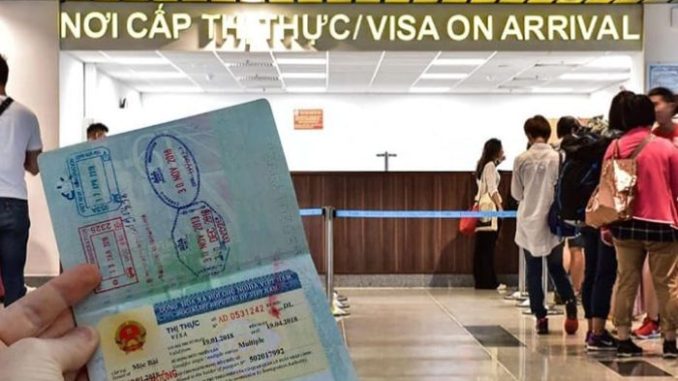
If you’re looking into the Vietnam visa for Mexican citizens in 2026, you’re already smarter than the hundreds of travelers I see every month arriving at Tan Son Nhat completely unprepared — clutching printouts of outdated blog posts about “visa on arrival letters” that haven’t been valid in years. Let me save you the headache right now.
Vietnam has fully committed to the 90-day e-visa system. That’s the whole story. No letters, no travel agency middlemen pulling strings at the airport counter, no scrambling for a stamp you can’t actually get anymore. The old Visa on Arrival approval letter system is dead — officially, legally, completely. Any website still selling those letters in 2026 is taking your money for nothing. I’ve said it before and I’ll keep saying it: the e-visa is the only legitimate route for Mexican tourists today.
And honestly? For Mexicans, this is genuinely exciting news. The e-visa lets you stay 90 days — single or multiple entry — and it costs a fraction of what the old letter services used to charge. Vietnam wants you here. Ha Long Bay, Hoi An, the coffee shops of Hanoi — the country has never been more ready for international visitors. But you have to come prepared.

Table of Contents
Vietnam E-Visa Requirements for Mexican Citizens
The 90-day Vietnam e-visa is straightforward when you know what you’re doing. Here’s what Mexican passport holders need:
Passport validity: Your passport must be valid for at least 6 months beyond your intended departure date from Vietnam. This is non-negotiable. Airlines will deny boarding if you don’t meet this threshold — I’ve seen it happen at MEX more times than I care to count.
Documents you’ll need:
- Valid Mexican passport (bio-data page scan, clear and color)
- Recent passport-style photo (white background, face centered, no glasses)
- Travel itinerary or confirmed onward/return flight details
- Accommodation proof (hotel booking confirmation)
- Valid email address to receive your approval
- Payment method (credit/debit card accepted)
Processing time: Standard processing takes 3 business days. If your trip is coming up fast, urgent processing is available and clears within 2 to 4 hours.
Cost: The official e-visa fee is USD $25. Some authorized services charge a service fee on top of this — factor that in when budgeting.
Once approved, you’ll receive your e-visa by email. Print it or save it digitally — Vietnam immigration accepts both formats at all official entry points.
Denied Boarding at MEX: What Happens When Your Visa Isn’t Ready
Picture this. It’s 4 AM at Benito Juárez International Airport (MEX). Your flight to Ho Chi Minh City departs in three hours — likely connecting through Seoul, Tokyo, or Taipei — and you’re at the Aeromexico check-in counter. The agent asks for your Vietnam visa. You pull up your email. Nothing.
Maybe you applied yesterday and assumed 3 business days was just a suggestion. Maybe the portal timed out mid-application and you thought it went through. Either way, you are standing there, bags packed, visa-less, and the clock is absolutely ticking.
This is the situation I built our Super Urgent Visa Service for. Our emergency team operates around the clock, seven days a week, and can push through a valid Vietnam e-visa clearance within 2 to 4 hours — fast enough to make most international connections. We work through priority processing channels that simply aren’t available to standard applicants refreshing their inbox at the gate.
💡 Expert Insight from Stanley Ho: “Over my 20+ years handling travel logistics, the most frequent disruption occurs at the check-in desk due to simple application formatting errors. If you are stuck at the airport and denied boarding, don’t panic—our emergency team can secure a new E-visa clearance through priority channels within hours, saving your flight.”
Don’t let a paperwork issue cost you a non-refundable ticket. The emergency service fee is a fraction of what you’d lose on a missed flight.
The Mexican Passport Trap: Name Formatting Errors That Kill Applications
This is where I see Mexican travelers get tripped up more than anywhere else. And it’s completely avoidable — if you know what to look for.
Mexican naming conventions are brilliant culturally and a genuine headache for the Vietnam e-visa portal. Here’s the core problem: Mexican citizens typically carry two surnames — the paternal family name followed by the maternal family name. So “Carlos Ramírez Flores” has a paternal surname of Ramírez and a maternal surname of Flores. Simple enough in Mexico. Not so simple on a Vietnamese government immigration form that was designed with single-surname conventions in mind.
The most common error is splitting the name incorrectly across fields. Applicants sometimes enter only the paternal surname as “Last Name,” leaving the maternal surname in a limbo that causes an automatic system mismatch against the passport data. Your e-visa must match your passport exactly — and I mean exactly.
The second major issue is accented characters. The letter ñ in names like Muñoz, Ibáñez, or Peña — and accented vowels like é in Jiménez, á in Alcántara, ú in Garduño — are standard on Mexican passports. The Vietnam e-visa portal does not reliably render these characters. You need to enter the romanized version: Munoz, Ibanez, Pena, Jimenez, Alcantara, Garduno. If your passport machine-readable zone already strips the accents (it does — look at the bottom two lines), match that formatting exactly.
My advice: open your passport, look at the machine-readable zone at the bottom of the photo page, and copy your name exactly as it appears there — no accents, no special characters. That’s your source of truth for the application.
Skip the Queue: VIP Fast-Track at Vietnam’s Airports
For any Mexican traveler who’s connected through a U.S. hub and spent hours in line already, the last thing you want is to hit another immigration queue when you land in Vietnam after 20-plus hours of travel. I completely understand that feeling.
Our VIP Airport Fast-Track service at Vietnam’s main international airports — Noi Bai in Hanoi (HAN), Tan Son Nhat in Ho Chi Minh City (SGN), and Da Nang (DAD) — puts a personal concierge at the gate the moment your flight arrives. They escort you directly through the diplomatic and priority immigration lane, bypassing the standard arrival queue entirely.
For business travelers heading to meetings in District 1 or the industrial corridors outside Hanoi, this is a logical operational decision. For anyone who simply values their time and their first impression of Vietnam, it’s worth every peso. You clear immigration, collect your bags, and you’re in a car — while everyone else is still shuffling forward in a line.
How to Apply for Your Vietnam E-Visa in 2026
The process is clean and digital from start to finish:
- Go to the official portal or a trusted authorized service like VisaOnlineVietnam.com
- Fill in your personal details — pay special attention to name formatting (see the section above — strip those accents, match your machine-readable zone)
- Upload your documents — passport bio-page scan and a recent passport photo with white background
- Pay the visa fee — credit or debit card accepted
- Submit and wait for confirmation — standard processing is 3 business days; urgent processing clears in 2 to 4 hours
- Receive your e-visa by email — print it or save it on your phone, Vietnam accepts both
That’s it. The days of dealing with letter agencies and wondering if a stamp would materialize at the airport counter are long gone. This is the system now, and for Mexican travelers, it genuinely works well once you nail the name formatting.
Frequently Asked Questions
Can Mexican citizens get a visa on arrival in 2026? No. The old Visa on Arrival approval letter system — where you paid an agency to secure a letter you’d exchange for a stamp at the airport — is completely defunct. That pathway no longer exists. In 2026, the 90-day e-visa is the only valid tourist entry route for Mexican citizens. Any service still offering “VOA letters” is selling you something that won’t work.
How long is the Vietnam E-visa valid for Mexican passport holders? The standard Vietnam e-visa is valid for 90 days, available as single entry or multiple entry. Multiple entry is the smarter choice for anyone planning to hop across borders into Cambodia, Laos, or Thailand and return to Vietnam within the same trip — which a lot of Mexican travelers do on longer Southeast Asia itineraries.
What do I do about the ñ and accent marks in my name on the Vietnam e-visa form? Strip them out and match the machine-readable zone on the bottom of your passport’s photo page. The portal doesn’t support ñ, á, é, í, ó, ú, or any other accented characters. Enter Munoz instead of Muñoz, Jimenez instead of Jiménez. This is the single most common application error for Mexican passport holders — don’t let it be yours.
Can I extend my Vietnam E-visa once I’m already in the country? Extensions are possible but not guaranteed and require coordination with Vietnamese immigration authorities before your current visa expires. It’s far simpler to apply for a multiple-entry 90-day e-visa before you travel and plan your exit and re-entry dates accordingly. Don’t count on an in-country extension as part of your original itinerary.
Is the Vietnam E-visa valid at all entry points? Yes. The e-visa is accepted at all international airports — including HAN, SGN, and DAD — as well as authorized land border crossings and major seaports. Just verify that your specific entry point is listed as authorized before finalizing your travel plans, particularly if you’re arriving overland from Cambodia or Laos.
About the Reviewer: Stanley Ho is the CEO of VisaOnlineVietnam and a recognized expert consultant in the international aviation and travel service industry. With decades of experience navigating complex immigration regulations, Stanley and his team specialize in providing seamless visa solutions, fast-track airport services, and emergency travel assistance for global citizens visiting Vietnam.