

If you’re looking into the Vietnam visa for Israeli citizens in 2026, here is everything you need to know without the noise: Israel does not have a visa exemption agreement with Vietnam, which means every Israeli passport holder — tourist, business traveler, digital nomad, retiree — needs to obtain entry authorization before crossing the Vietnamese border. No exceptions. The good news is that the process is entirely online, fully digital, and straightforward when you know the specific traps that catch Israeli applicants off guard.
The old Visa on Arrival approval letter system is completely dead. If you’ve come across any website still describing a process where you buy an approval letter from an agent, print it out, and collect a visa stamp at the airport immigration counter — stop reading that page. That system no longer exists. What exists in 2026 is the 90-day Vietnam E-visa: single or multiple entry, applied for online, approved by email, valid for everything from a two-week holiday in Hoi An to a three-month overland journey through the whole country.
Vietnam is one of the most rewarding destinations in Southeast Asia for Israeli travelers — the food alone is worth the flight from Tel Aviv. This guide makes sure the visa doesn’t become an obstacle on the way there.
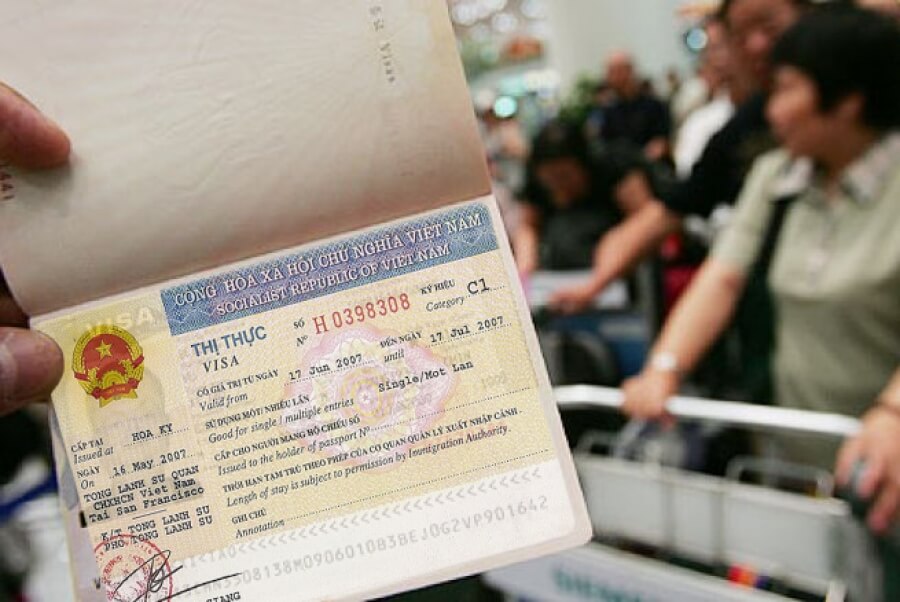
Table of Contents
Vietnam E-Visa Requirements for Israeli Citizens
The 90-day E-visa is the standard authorization for Israeli tourists in 2026. You choose either single-entry (enter once and the visa terminates the moment you leave) or multiple-entry (exit and re-enter freely within the 90-day validity period). For any itinerary involving side trips to Cambodia, Thailand, Laos, or elsewhere in the region, multiple-entry is the correct choice.
Here’s what you need:
- Valid Israeli passport — Minimum 6 months of remaining validity beyond your planned exit date from Vietnam. The airline checks this at check-in; Vietnamese immigration checks it on arrival. At least 2 blank visa pages required.
- Digital passport photo — White background, taken recently. No glasses, no headwear, no filters.
- Clear passport scan — Full-color scan or photograph of your biographical data page. Every line of text must be readable. The portal rejects blurry or cropped submissions automatically.
- Intended entry date — When you plan to first enter Vietnam. You can enter within 30 days of this stated date, so there’s flexibility.
- Entry port — The airport or border crossing you intend to use for first entry.
- Accommodation details — Hotel name and address, or host information.
- Payment — E-visa fee paid online at submission. Standard international cards accepted.
Processing time under normal conditions is 3 business days. For departures within 48 hours, that window won’t work — see the airport emergency section below.
Phu Quoc: The One Visa-Free Exception for Israeli Travelers
There is a specific carve-out worth knowing. Israeli citizens who fly directly to Phu Quoc Island (PQC) — Vietnam’s resort island in the Gulf of Thailand — may enter without an E-visa for stays of up to 30 days, provided both arrival and departure happen directly to and from Phu Quoc by air or sea, without crossing into mainland Vietnam. The moment you take a ferry or flight to the mainland, you need a valid E-visa.
So: Phu Quoc beach holiday only, no mainland travel → visa-free for 30 days. Any other itinerary in Vietnam → E-visa required. If there’s any chance your plans will evolve and include Hanoi, Ho Chi Minh City, or anywhere else, just get the E-visa before you go. It costs little, takes three days, and removes all uncertainty.
Denied Boarding at TLV: What Happens When Your Visa Isn’t Ready
Ben Gurion International Airport (TLV), Terminal 3, Tel Aviv. You’re at the El Al or Israir check-in counter, heading to Ho Chi Minh City or Hanoi via a connection. Flight departs in under three hours.
The check-in agent asks for your Vietnam entry authorization. You reach for your phone. The approval email isn’t there — or it arrived, but the status shows “rejected” in the system. Maybe you applied four days ago and didn’t account for a Jewish holiday or a Vietnamese public holiday that quietly ate into your processing window. Maybe there’s a name transliteration error on your application that triggered a manual review. Whatever the cause, right now you are standing at the counter in full trip-cancellation panic.
The airline has no authority to board you to Vietnam without valid documentation. That is a hard stop. Rescheduling for tomorrow doesn’t fix a rejected application — you’d be flying into the same wall twenty-four hours later with extra hotel costs and a ruined itinerary.
What you do: contact a visa specialist offering the Super Urgent E-visa service — priority processing through official channels that delivers valid E-visa clearance within 2 to 4 hours. This service exists precisely for situations like this one. It’s real, it’s legal, and I’ve personally managed dozens of these calls from travelers stuck at airports worldwide.
💡 Expert Insight from Stanley Ho: “Over my 23+ years handling travel logistics and Vietnam visa services, the most frequent disruption occurs at the check-in desk due to simple application formatting errors. If you are stuck at the airport and denied boarding, don’t panic—our emergency team can secure a new E-visa clearance through priority channels within hours, saving your flight.”
The practical lesson: apply for your Vietnam visa for Israeli citizens at least 5 to 7 business days before departure. Build in buffer for Israeli national holidays, Vietnamese public holidays, and any application error that needs correction. The process is fast when everything is clean. When it isn’t, margin saves trips.
The Israeli Passport Trap: Name Transliteration Errors That Kill Applications
This is the section Israeli travelers skip because they assume entering their name is simple. It isn’t always — and this specific issue is responsible for a meaningful share of E-visa rejections and immigration delays I see from Israeli applicants.
Israeli passports use Hebrew as the primary script, but the machine-readable zone at the bottom of your biographical page — the two lines of coded text that immigration scanners everywhere read — uses transliterated Latin characters. The Vietnam E-visa portal only accepts Latin characters, so the MRZ transliteration is the definitive format to use. The complication is that Hebrew-to-Latin transliteration is not always consistent. The same name can appear differently across different passport generations: “Yosef” or “Josef”, “Haim” or “Chaim”, “Rivka” or “Rivkah”, “Tzvi” or “Zvi”. If your name on a previous visa, booking, or other document doesn’t match what’s in your current passport’s MRZ, and you use the old spelling on the E-visa application, you’ll have a mismatch that gets flagged at the Vietnamese border.
The rule is simple and absolute: open your current Israeli passport, look at the machine-readable zone at the very bottom of your photo page — the two lines beginning with “P<ISR” — and copy your name exactly as it appears there. Character for character. Do not use a version of your name from memory, from an old document, or from a previous passport. Use the MRZ of your current, travel-valid passport.
Do this before submitting. Name mismatches are caught at the border, not at the portal, which means you might not discover the error until you’re standing at Vietnamese immigration after a seven-hour flight from Tel Aviv.
VIP Airport Fast-Track Service on Arrival in Vietnam
Flights from Ben Gurion (TLV) to Vietnam are long — typically 10 to 13 hours with at least one connection, usually through Bangkok, Doha, Dubai, or Istanbul. By the time you land, you want immigration to be fast. At Tan Son Nhat International Airport (SGN) in Ho Chi Minh City, standard foreign national queues can stretch 45 minutes or more during peak travel periods. Noi Bai (HAN) in Hanoi has similar congestion. Neither is the welcome to Vietnam that a tired traveler deserves.
The VIP Fast-Track service changes that entirely. A dedicated agent meets you in the arrivals area before the general immigration hall, escorts you through priority clearance lanes, and handles your documentation at the counter. You’re through immigration in under 15 minutes. For Israeli travelers arriving after a long-haul connection — especially those with onward domestic flights or tour itineraries starting immediately — this is worth every shekel.
Book it in advance alongside your E-visa. The service is available at all major Vietnamese entry airports: SGN and HAN handle the bulk of international arrivals. Beach-focused travelers frequently enter through CXR (Cam Ranh Airport, serving Nha Trang) or fly directly to PQC (Phu Quoc). For those using the Phu Quoc visa-free entry option, fast-track is still available on the island side.
How to Apply for the Vietnam E-Visa as an Israeli Citizen in 2026
The full process from start to approval, step by step:
- Go to the official portal or a trusted visa service. Vietnam Immigration’s official E-visa portal is evisa.xuatnhapcanh.gov.vn. Assisted services like VisaOnlineVietnam provide guided application with error-checking before submission.
- Select single or multiple entry and set your entry date. Think through your itinerary before choosing — multiple entry is the right call for anyone planning regional travel. Your 90-day clock starts at first entry into Vietnam, not at issuance.
- Enter your name from the MRZ of your current passport. See the transliteration section above. No Hebrew characters, no guessing — copy the machine-readable zone exactly.
- Upload your photo and passport scan. Both must be clear, in color, and fully legible. These trigger automatic rejections if they fail quality thresholds.
- Choose your intended entry port. The airport or border crossing you plan to use first. Updatable if plans change.
- Pay and submit. Save your reference number.
- Receive your E-visa by email. Standard: 3 business days. Urgent: 2 to 4 hours. Print or save digitally — both are accepted at Vietnamese borders.
Total time to complete: approximately 20 minutes with documents ready.
Frequently Asked Questions
Do Israeli citizens need a visa to visit Vietnam in 2026?
Yes. Israel and Vietnam have no bilateral visa exemption agreement, so all Israeli passport holders require entry authorization regardless of travel purpose. The 90-day E-visa is the standard option, applied for entirely online. The only exception is direct travel to Phu Quoc Island, where Israelis may enter visa-free for up to 30 days without crossing to the Vietnamese mainland.
Can I still get a Vietnam visa on arrival as an Israeli citizen?
No. The Visa on Arrival approval letter system — where you purchased an authorization letter from an agency before departure and collected a visa stamp at the airport immigration counter — has been completely discontinued. It no longer exists in 2026. The only tourist authorization mechanism is the online E-visa.
How long is the Vietnam E-visa valid for Israeli passport holders?
The 90-day E-visa is valid for 90 days from your first entry into Vietnam. Single-entry holders may enter once. Multiple-entry holders may exit and re-enter freely within that 90-day window. The validity window does not start at issuance — it starts when you physically cross into Vietnam.
My Hebrew name has multiple Latin transliterations — which one do I use?
Use the exact spelling shown in the machine-readable zone at the bottom of your current passport’s biographical page. That is the two-line block starting with “P<ISR” at the very bottom of the photo page. That is how Vietnamese immigration computers will read your passport. Any other version — from an old passport, a booking confirmation, or personal preference — creates a risk of mismatch.
I’m an Israeli currently based in Poland — do I need to visit the Vietnamese Embassy in Warsaw to apply?
No. The entire Vietnam visa for Israeli citizens is applied for online. There is no requirement to appear at any Vietnamese embassy or consulate, whether in Tel Aviv, Warsaw, or anywhere else. Apply online, receive approval by email, and travel.
About the Reviewer: Stanley Ho is the CEO of VisaOnlineVietnam and a recognized expert consultant in the international aviation and travel service industry. With 23+ years of experience in travel logistics and Vietnam visa services, Stanley and his team specialize in providing seamless visa solutions, fast-track airport services, and emergency travel assistance for global citizens visiting Vietnam. Read his full profile here